You’re thinking about taking your first solo trip. Maybe you’ve been thinking about it for a while. And maybe you’re also a little nervous.
It is understandable to feel uncertain. You can choose a first trip that fits your experience, budget and comfort level.
Here’s the useful part: the nerves shrink fast once the trip stops being an idea and turns into a plan. So that’s what this is. A checklist for the decisions actually in front of you right now. Where to go. How long to stay. What to sort out before you leave. What goes in the bag.
Two of the bigger questions, staying safe and meeting people, have full guides of their own, and we’ll point you to them where they come up. If the safety one is the one on your mind, our solo travel safety tips cover the practical habits in detail, and this checklist will still be here afterwards.
Why the Nerves Are Worth It
Before the logistics, a quick reminder of what you’re signing up for.
You get to be completely selfish. Want to spend three hours in one museum? Do it. Want to skip the landmark everyone says you “have to see”? Skip it. Nothing to negotiate, nobody to wait for.
You find out who you are without the audience. Away from the roles and routines of home, you learn what you actually enjoy, how you handle things going sideways, and what you’d rather not repeat.
You can choose when to seek company. Classes, organized outings and shared-interest activities can give you opportunities to meet people while keeping time for yourself.
You come back with proof. After navigating an unfamiliar country by yourself, a lot of ordinary problems shrink. That confidence is real, and it doesn’t wear off when you get home.
Step 1: Pick a Forgiving First Destination
This is the decision that shapes every other one, and the goal for trip one isn’t impressive. It’s forgiving.
What to look for:
- Current safety information: official advice for your destination and the areas you will visit
- A language you can work with: you speak it, or English is widely understood where you’ll be
- Easy logistics: trains and buses that run to a timetable, walkable city centers, reliable data
- Room in the budget: you can pay for decent accommodation and the occasional taxi without recalculating every time
- Not too remote: save the off-grid stretch for trip three
Places that tend to be kind to first-timers:
_Europe:_
- Portugal: compare city-based routes and the transport between your chosen stops
- The Netherlands: consider a city break and research local transport and cycling rules
- Iceland: check weather, road conditions and the suitability of any guided or self-drive route
_Asia:_
- Japan: research the stations, transport passes and language support on your planned route
- Taiwan: compare city transport and the language resources you will need
_Americas:_
- Costa Rica: investigate transport between regions and requirements for outdoor activities
- Canada: plan distances and seasonal conditions rather than assuming every destination is close or familiar
What to save for later:
- Places where you’d share no common language at all
- Anywhere your government currently advises against
- Very remote regions with thin transport and medical options
None of this is about what you can handle. It’s about stacking the odds so your first trip builds confidence rather than spending it. And if company is part of the appeal, some destinations are especially good for meeting fellow travelers.
Step 2: Choose a Trip Length You Can Sustain
A short nearby trip can be a useful start. Two or three days lets you try solo travel without a long commitment.
A longer trip needs more flexibility. Consider your budget, energy, support network and options for changing plans.
Choose a length that works for you. A week or two may suit some travelers, but there is no universal ideal duration.
One scheduling note while you’re booking: don’t fill every day. Leave two or three afternoons completely open. Those are usually the ones you end up telling people about.
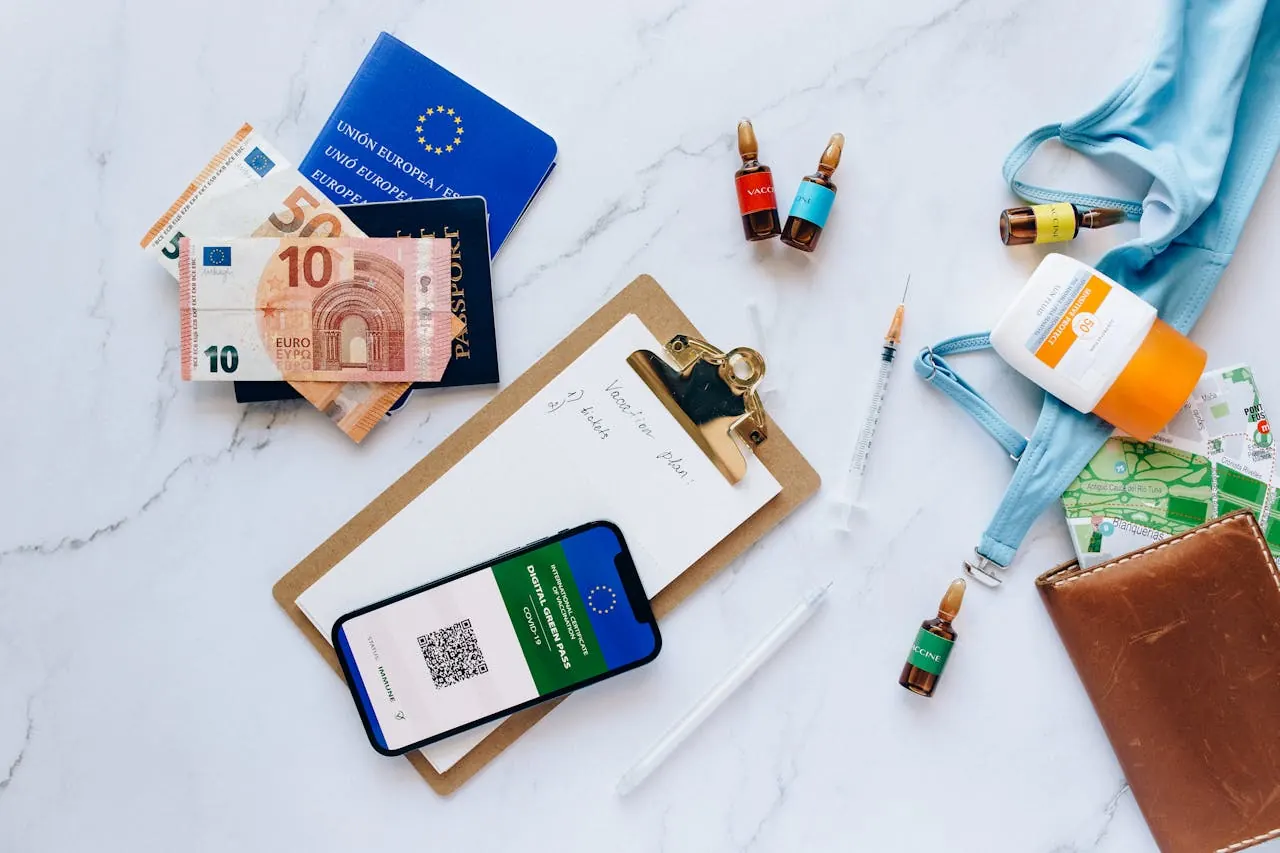
Step 3: Sort the Paperwork, the Money and the Backups
Documents
- Passport that meets the entry and transit rules for your nationality and route; validity requirements vary
- Visa if you need one, researched early rather than the week before
- Copies of everything, stored separately from the originals
- Travel insurance, which is not the line item to save money on
Money
- At least two cards, ideally from different accounts
- A small amount of local currency for the first taxi or coffee
- One backup payment method kept somewhere other than your wallet
- A rough daily budget, so you know what “normal” looks like and notice when it isn’t
Tech
- Offline maps downloaded for the whole region, not just the city center
- A translation app with the language pack saved for offline use
- Emergency numbers, your accommodation address and your insurer saved somewhere you can reach without data
- A power bank, and the right plug adapter
Someone at home who knows the plan
- Share your route and accommodation details before you go
- Agree what “checked in” looks like and how often it should happen
- Make sure they have the numbers they’d need if they couldn’t reach you
Set up check-ins before departure. Sorom’s mobile safety tools support scheduled check-ins and alerts to configured emergency contacts. Delivery depends on setup, permissions, connectivity and service availability. A meetup PIN links a meeting to a Sorom account; it is not a government-ID check or a safety guarantee. Confirm the current features for your plan and platform, and agree a backup check-in method.
Step 4: Pack Like You’re the One Carrying It
Because you are. Nobody is going to hold your bag while you buy a ticket, and nobody is taking the heavy half. The test is simple: can you walk twenty minutes with all of it?
The essentials:
- Clothes that mix into more outfits than they look like they should
- Comfortable, broken-in walking shoes, which matter more than anything else here
- Layers for the weather you didn’t plan for
- Basic toiletries only, because you can buy the rest when you land
- Any medication you take, plus a small first-aid kit
- Electronics and the chargers that actually go with them
Worth the space:
- A portable door lock or door wedge, mostly for peace of mind
- Paper copies of your documents and an emergency contact card
- A reusable water bottle
- A small daypack that folds into itself
- Something to read for the transit hours
Leave behind: the third pair of shoes, the “just in case” outfit, and anything you’d be genuinely upset to lose.
Two Questions You’re Probably Also Asking
Will I be lonely? You might enjoy the solitude, feel lonely or experience both. Plan ways to contact people you trust and adjust the trip if it is not working for you. When you do want company it’s easier to find than you’d expect, whether that’s a hostel common room, a free walking tour, a cooking class or a group activity you join for an afternoon. The full playbook is in our guide to how to meet people while traveling.
Is solo travel safe? Risk depends on the destination, current conditions, planned activities and personal circumstances. Preparation can help reduce risk, but cannot guarantee safety. It deserves more than a paragraph, so we gave it two guides: is it safe to travel alone for the overall picture, and solo female travel safety for the questions women ask most.
You’ll Come Home Different
Here’s the part nobody mentions before a first solo trip: you don’t come back quite the same.
More confident. More willing to be uncomfortable for a couple of hours. Better at reading a train timetable in a language you don’t speak.
You’ll have stories that belong entirely to you, and you’ll probably start planning the next trip before the bag is unpacked.
You’re Ready
Pick the destination. Pick the dates. Book the flight. The checklist above is the whole job, and none of it requires you to be a different person than you are today.
Future you, sitting in a cafe in Lisbon or getting pleasantly lost in Tokyo, will be glad you stopped thinking about it.
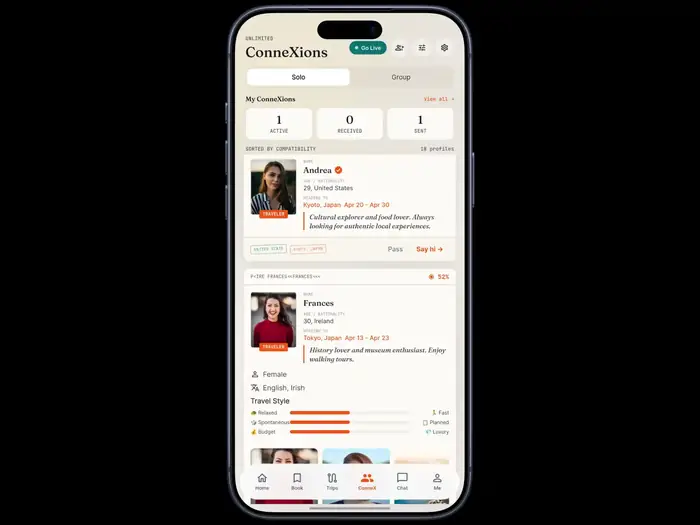
Download Sorom for mobile check-ins, ConneXions and group activities, or start a manual solo itinerary on desktop or tablet. Maya is available in the mobile app under the current plan and trial limits. For practical pre-departure checks, see the UK foreign travel checklist and your own government’s advice.
Spread the word